Frictional cooling in active matter
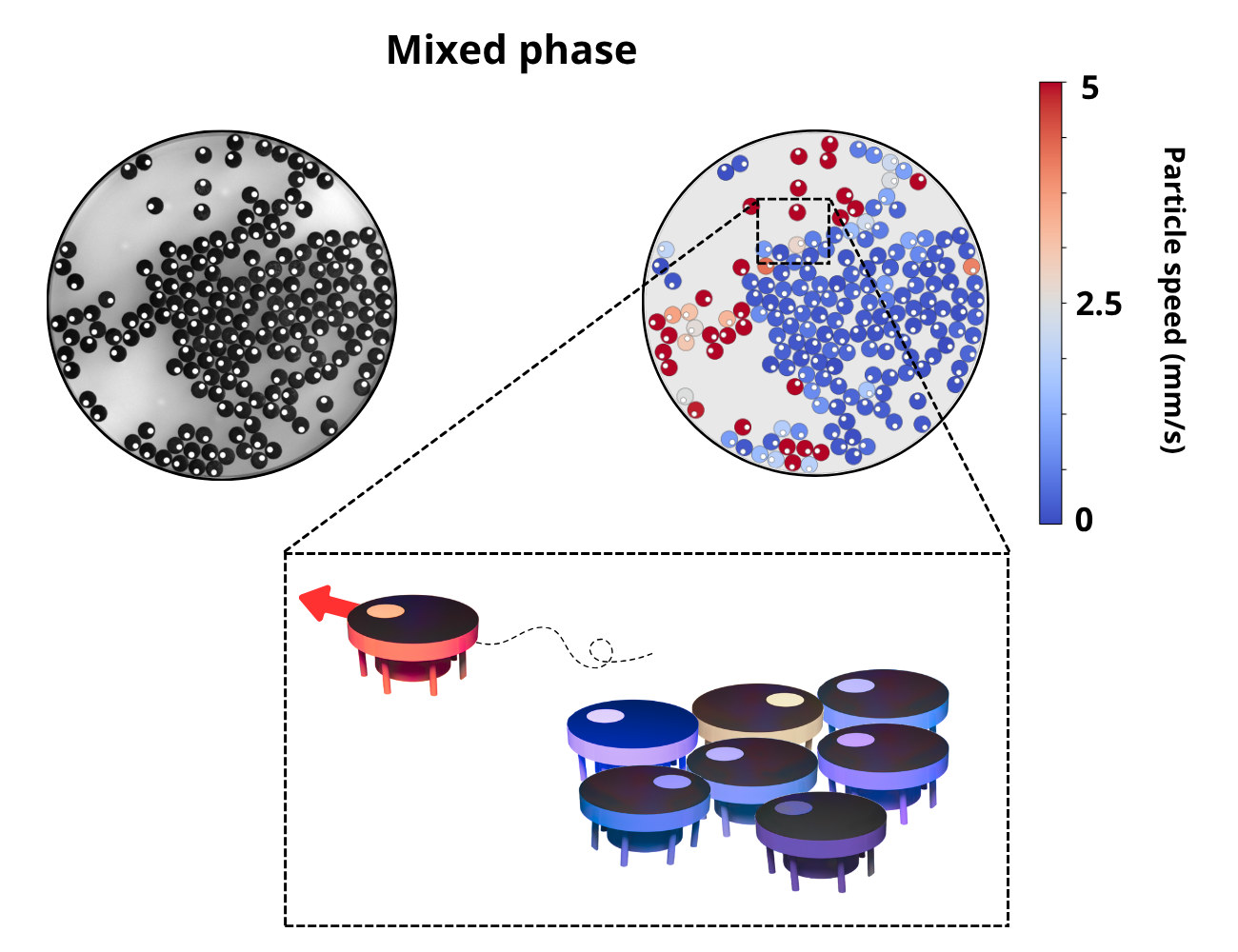
We have identified a spontaneous cooling phenomenon in active matter, termed self-sustained frictional cooling, arising from the interplay between activity and dry friction, without the need for an external thermal bath. Through experiments and simulations on active granular robots, we demonstrate how this mechanism can lead to the formation of dense, arrested clusters, opening new perspectives for controlling the dynamical and structural properties of robotic swarms.
2024-2025
For more informations look at:
ARTICLE link: https://www.nature.com/articles/s41467-025-62626-9
PRESS RELEASE link: https://www.hhu.de/en/detail-research-news/friction-which-cools